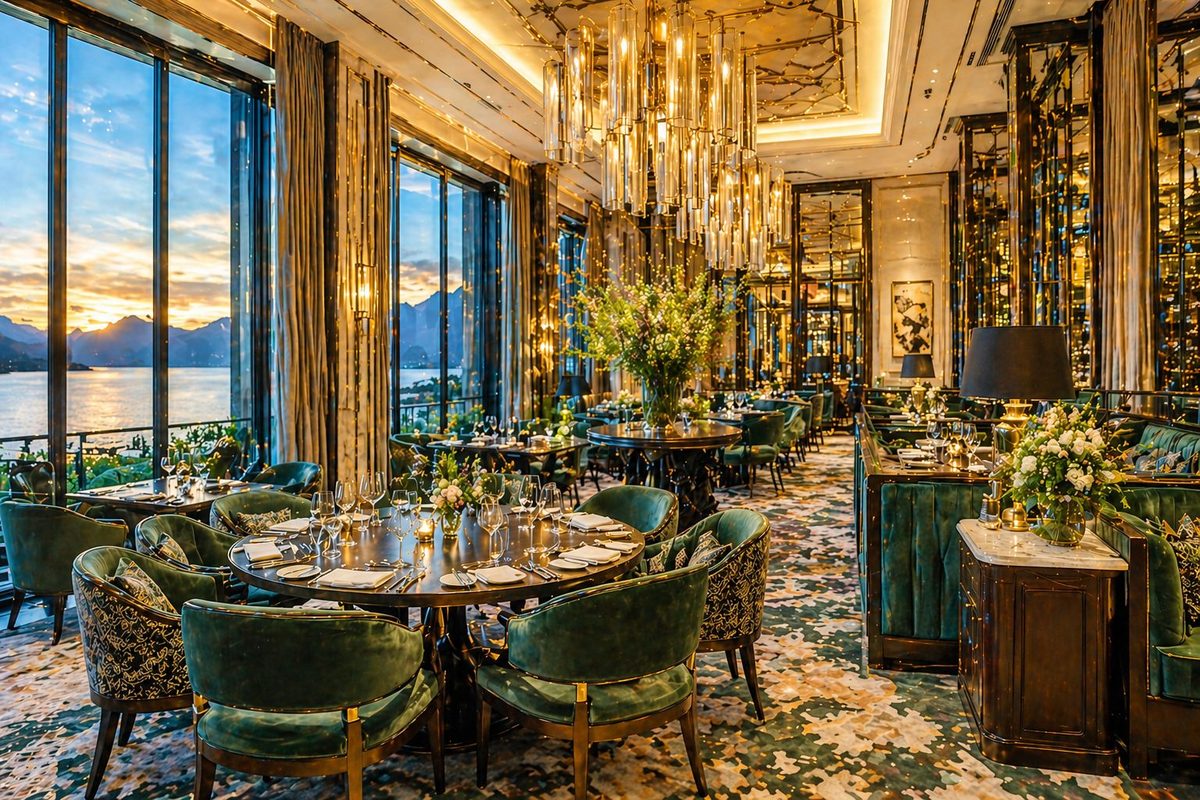
Two Ways to Think About an Outlet
Walk into most hotels and the restaurant feels like a given. It is there because hotels are supposed to have one. Safe menu, safe décor, inoffensive everything. Designed to offend no one and excite no one, positioned as a convenience for guests who cannot be bothered leaving the building.
The tragedy is not that this approach fails financially — it often covers costs. The tragedy is that it represents one of the most squandered opportunities in commercial hospitality. A hotel restaurant sits inside an existing guest flow, has a built-in audience, benefits from the property's location and brand infrastructure, and yet most of them choose to be invisible.
A facility is used when it is convenient. A destination is sought out. These are not just different words for the same thing — they represent fundamentally different commercial relationships with the guest, the local community, and the city a hotel sits in.
The Two Mindsets in Conflict
Having worked across hotel F&B on both sides of this tension, the underlying conflict is consistent. Hoteliers think in occupancy, RevPAR, and cost efficiency. Their instinct is stability: rooms are predictable, scalable, and relatively low-risk. Restaurateurs think in story. They obsess over concept, flavour balance, the way a chair feels, the playlist. They know that survival depends on locals — if the community does not come, the tables do not fill.
The problem is that most hotel F&B decisions are made by people trained in the former mode and applied to a problem that requires the latter. The result is a restaurant that optimises for the guest who is already in the building and ignores everyone else. That is a strategic error with measurable consequences.
When locals do not come, hotel guests who want to eat where the city eats will go elsewhere. When the restaurant has no identity that travels, the hotel loses a significant word-of-mouth channel. When F&B is treated as a facility rather than a brand asset, it stops contributing to the story the hotel tells about itself.
Why "Safe" Is the Riskiest Choice
Safety in hotel F&B concept design is a mirage. A menu engineered to offend no one will excite no one. A space designed to blend into the wallpaper will be ignored when guests are deciding where to eat. In a city with a strong restaurant culture, the hotel that plays it safe is always competing against venues with stronger convictions, better stories, and guests who were there before the hotel opened.
Invisible restaurants do not just miss revenue. They miss the chance to become what every hotel F&B outlet could be: the most talked-about room in the building, the reason people who have never stayed at the hotel know its name, the asset that makes a guest choose this property over the one across the street.
What Thinking Like a Restaurateur Actually Means
For a hotel F&B team, thinking like a restaurateur is not about abandoning commercial discipline. It is about applying creative conviction to a commercial framework. In practice, it means five things.
First, the concept has a point of view. It stands for something specific — a cuisine, a sourcing philosophy, a service style, a mood — rather than trying to be everything to everyone. The more polarising that specificity feels, the more likely it is to attract the guests who become advocates.
Second, the menu is built for the local guest first and the hotel guest second. Locals create the culture of a restaurant. Hotel guests follow the culture that already exists. A room full of hotel guests looks like a facility. A room where locals are regulars looks like a destination that hotel guests are lucky to access.
Third, the space tells a story that is distinct from the hotel lobby. The restaurant should feel like it earns its own identity within the building — not a continuation of the corridor aesthetic, but a deliberate environment with its own logic and atmosphere.
Fourth, the team is trained in the concept's story, not just the menu. Service in a destination restaurant is not order-taking. It is storytelling through every interaction — the provenance of an ingredient, the reason a dish was designed a certain way, the connection between what is on the plate and where the hotel sits in the world.
Fifth, bold decisions are made rather than deferred. The forgotten corner of the property becomes a bar with a name people whisper to each other. The prime view that the rooms team wants as another suite becomes a dining room that appears in every review of the city. Rooms sell consistently. Restaurants create stories that sell rooms for years.
The Real Equation
A room is a product. F&B and service are your brand.
Rooms may generate the majority of revenue. But the restaurant is where a guest decides how they feel about the hotel, and where that feeling gets communicated to every person they talk to when they return home. The commercial case for destination thinking in hotel F&B is not sentimental — it is measurable in RevPAR uplift, repeat bookings, and the share of voice a property holds in a competitive market.
The hotels that will win the next decade are not the ones with the most rooms or the lowest cost base. They are the ones that blur the line between guest and local, that turn their restaurants into reasons people travel rather than conveniences they tolerate. Not because this is what hospitality should feel like — though it should — but because it is what the market will reward.