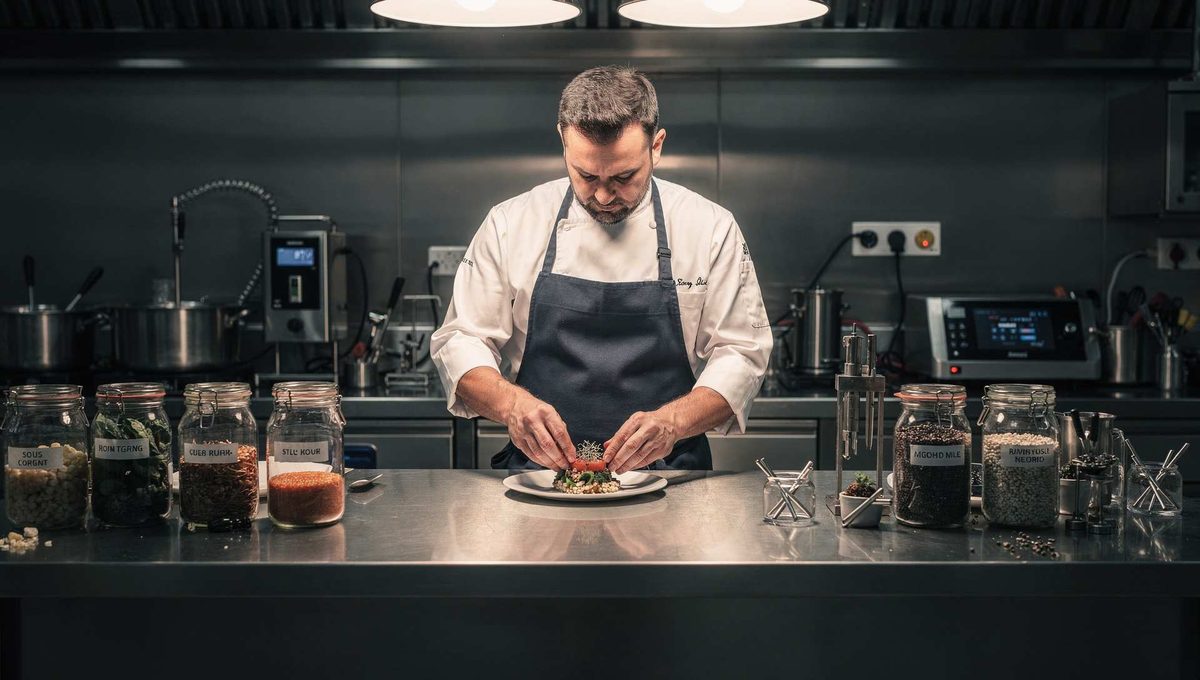
The Hidden Cost of No Downtime
The best menus do not come out of chaos. They come out of quiet.
Most kitchens exist in one of two modes: the frantic service line where speed rules everything, and the prep floor where ideas exist but never have enough time to mature. Between those two modes, the space for genuine culinary thinking — testing, refining, failing productively — is almost never protected. It is treated as a luxury. Something that happens when the business is quiet enough to allow it, which means it almost never happens at all.
This is a commercial problem, not just a cultural one. When chefs are not given structured time to develop the menu, the menu stagnates. When the menu stagnates, guest interest plateaus. When guest interest plateaus, average spend and repeat visit rates follow. The financial cost of treating creative time as optional is measurable — it just takes longer to show up in the numbers than a bad food cost week.
What Breathing Space Actually Produces
The commercial case for structured creative time is not abstract. In operations where it is properly built in, three things consistently improve: menu differentiation, chef retention, and the rate at which the business adapts to shifting guest preferences.
Menu differentiation is where the impact shows most directly. A team with regular development time produces dishes that are tested, refined and intentional. A team without it produces dishes that are safe, competent and interchangeable with what the venue two blocks away is already serving. In a competitive market, the difference between those two outcomes is the difference between pricing power and discounting.
Retention is the less visible but often more financially significant outcome. The primary reason talented chefs leave operations that would otherwise suit them is creative stiflement — the sense that they are producing line, not cooking. Replacing a senior chef costs multiples of what protecting two hours a week of development time would cost. When creative chefs feel invested in the direction of the menu, they stay. And when they stay, consistency, training quality and team culture all improve.
How the Best Operations Build It
Noma's R&D kitchen model
René Redzepi built a dedicated test kitchen as a structural element of Noma — not a perk offered when service pressure allowed, but a permanent resource with its own team and calendar. The output was not just new dishes. It was a culture where failure was a legitimate part of the process, which meant the team was willing to take the risks that produced genuinely memorable work. The R&D kitchen was not separate from the commercial operation. It fed directly into menu rotation and was a key reason Noma maintained creative authority over years of high occupancy and commercial demand.
Eleven Madison Park's transition period
Before Eleven Madison Park moved to a plant-based menu, the team spent months in structured experimentation — staff tastings, iteration sessions, deliberate failure and refinement. This was not done in the margins of a normal service week. It required protected time, committed resources, and leadership that understood the long-term commercial return on the investment. The transition became one of the most discussed restaurant repositioning moves in recent years precisely because the preparation behind it was so thorough.
Fast-casual operations and systematic innovation
It is worth noting that structured creative time is not exclusively the province of fine dining. High-performing fast-casual and QSR operations run central test kitchens dedicated to menu development, workflow refinement, and operational testing. Growth at scale — multiple locations, consistent quality, rapid menu refresh cycles — depends on having a creative and operational development process that is separate from the execution environment. The discipline is the same regardless of the price point.
Practical Ways to Build It Into Your Operation
Breathing space does not require a separate facility or a dedicated R&D budget that most operations cannot justify. It requires protected time, a structured process, and a leadership culture that treats creative development as part of the operating rhythm rather than an interruption to it.
Two hours per week of structured development time — with a clear brief, a tasting panel, and a documentation process — produces more usable output than informal creative conversations happening sporadically. Monthly staff tasting sessions where the whole team evaluates new ideas create shared ownership of the menu and surface insights that a senior chef working alone will miss. Rotating development leadership — giving sous chefs and senior line chefs the responsibility for a quarterly new dish or concept — builds ownership, expands the creative pool, and develops future leaders at the same time.
The documentation matters. Ideas that are tested but not captured disappear. A simple system for recording what was tried, what worked, and what the next iteration should address turns experimental time into institutional knowledge rather than individual memory.
What Leaders Get Wrong About This
The most common mistake is treating creativity as something that talented individuals generate independently, and structured time as something that gets in the way of real work. The reality is the opposite. Creativity in high-performing kitchens is a managed output. It requires conditions — enough time, enough psychological safety, enough structural support — that leadership creates or fails to create.
A chef who feels that their only value to the operation is execution will eventually leave or stop developing. A chef who feels that their creative contribution is recognised, structured, and consequential — that their ideas actually shape the direction of the business — will invest more deeply in the work and the team around them.
The question for any hospitality leader is simple: does your kitchen currently allow your chefs to create, or only to survive? The answer to that question is one of the strongest predictors of where the business will be in three years.